

Aesthetic treatments have become increasingly popular among people who want healthier-looking skin, smoother texture, fewer wrinkles, and improved confidence. From laser hair removal and chemical peels to skin rejuvenation and other cosmetic procedures, modern technology offers many options. However, the safety of these treatments depends on more than the procedure itself. The quality of the equipment, the experience of the practitioner, and the condition of the treatment environment all matter.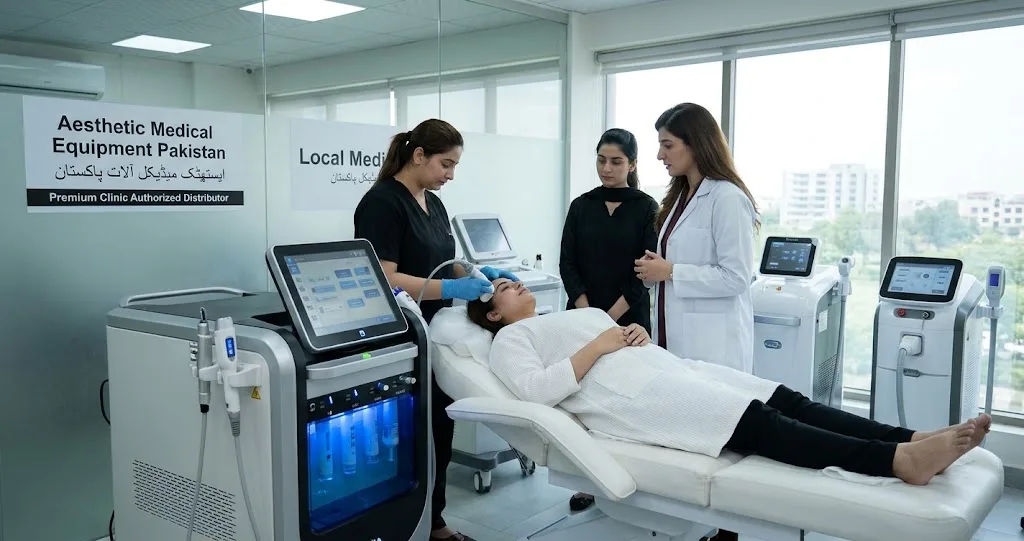
In Pakistan, clinics, dermatology practices, and aesthetic centres use different types of devices to perform cosmetic procedures. Choosing the right technology is essential because poorly maintained equipment or incorrect settings can cause burns, infections, scarring, and other complications.
Understanding aesthetic medical equipment pakistan is therefore important for clinic owners, medical professionals, and individuals considering aesthetic treatments. Learning how these devices work, what safety standards to look for, and why professional training matters can help people make better decisions. Although modern equipment can improve treatment outcomes, no device is completely risk-free.
The key is to understand the technology, verify its suitability, and ensure that qualified professionals operate it correctly. This guide explains the main safety considerations and practical steps that can help make aesthetic procedures safer.
Aesthetic Medical Equipment
Aesthetic medical equipment includes devices and instruments used for cosmetic treatments and certain dermatological procedures. These technologies can address concerns such as unwanted hair, pigmentation, fine lines, acne scars, and changes in skin texture.
Different devices work in different ways. Some use light energy, others use radiofrequency or ultrasound, while certain treatments rely on controlled chemical or mechanical processes.
The equipment must be appropriate for the intended procedure, the patient's skin characteristics, and the practitioner's level of training.
Common Types of Aesthetic Devices
Several types of equipment are commonly associated with aesthetic treatments.
Laser equipment: Laser devices deliver concentrated light energy for applications such as hair reduction, selected pigmentation treatments, and certain skin-resurfacing procedures. Different lasers have different wavelengths and treatment purposes.
Intense pulsed light devices: Intense pulsed light, commonly called IPL, uses broad-spectrum light rather than the single wavelength associated with a laser. It can be used for selected hair-reduction and skin treatments, depending on the device and patient.
Radiofrequency equipment: Radiofrequency devices deliver energy that heats tissue. Depending on the technology, they may be used for skin tightening or other cosmetic applications.
Ultrasound devices: Certain ultrasound technologies target tissue at specific depths for selected aesthetic treatments. Their safety depends on the device, treatment area, and intended use.
Microneedling devices: These instruments create controlled microscopic punctures in the skin. Proper technique, sterile components, and suitable patient selection are essential.
Hydrodermabrasion and facial treatment systems: These devices combine different methods of cleansing or exfoliation. Their safety depends on the attachments, solutions, cleaning procedures, and the patient's skin condition.
Each category has its own operating requirements. A device designed for one treatment should not automatically be considered suitable for another.
Is Aesthetic Medical Equipment Pakistan Safe to Use?
The short answer is that it can be safe when the equipment is appropriate, properly maintained, and operated by a suitably trained professional.
The phrase aesthetic medical equipment pakistan covers a broad market of devices with different manufacturers, technologies, quality levels, and intended uses. Therefore, it would be inaccurate to assume that every machine sold in the country offers the same level of safety.
Some devices may be manufactured by established companies with documented testing and technical support. Others may have limited documentation, unclear origins, or insufficient maintenance support.
The machine's appearance alone does not establish its quality. A modern touchscreen, attractive design, or impressive list of features does not prove that a device performs safely.
Patients should evaluate the clinic and practitioner rather than relying entirely on the equipment's brand or appearance.
Why Equipment Quality Matters
High-quality equipment is generally designed with defined operating parameters, safety features, and instructions for use. Depending on the device, these may include temperature monitoring, energy controls, emergency shutoff functions, protective sensors, and alerts for operating problems.
Such features can help reduce risks when used correctly.
However, even a well-designed machine can cause injury if the operator selects unsuitable settings, ignores contraindications, or fails to follow the manufacturer's instructions.
Conversely, a low-cost device should not automatically be considered unsafe simply because it is inexpensive. Its actual safety depends on its design, documentation, applicable approvals, condition, and intended use.
The most reliable approach is to verify the equipment's identity, supporting documentation, maintenance history, and suitability for the treatment being offered.
Important Safety Standards and Regulatory Considerations
Medical and aesthetic devices should meet the requirements that apply to their classification, intended use, and market.
In Pakistan, buyers and clinic owners should check relevant requirements established by the Drug Regulatory Authority of Pakistan, commonly known as DRAP, where applicable. Not every cosmetic device necessarily falls under the same regulatory category, so the specific product and its intended use must be considered.
A supplier's statement that a machine is approved should not be accepted without supporting evidence.
Check the Manufacturer and Product Documentation
Before purchasing or using a device, ask for the manufacturer's name, exact model, serial number, intended purpose, and technical documentation.
The documentation should explain how the machine operates, which treatments it is designed to perform, and what precautions must be followed.
Where relevant, request evidence of applicable registration, authorization, conformity assessment, or other required regulatory documentation.
International certifications and approvals can provide useful information, but their meaning varies. For example, a CE marking is associated with European conformity requirements, while US FDA clearance or approval applies to specific products and indications under US regulatory rules.
These are not interchangeable claims, and neither should be assumed to establish compliance with every Pakistani requirement.
Avoid Unsupported Marketing Claims
Be cautious when suppliers promise that a device is completely risk-free, permanently removes every skin concern, or works equally well for every skin type.
Medical devices have defined limitations. Treatment results vary according to the technology, practitioner, patient's condition, and other factors.
Responsible suppliers should explain these limitations instead of relying on exaggerated advertising.
The Importance of Professional Training
Equipment quality is only one part of treatment safety. The person operating the machine must understand its functions, limitations, and possible complications.
Aesthetic procedures may appear simple, but selecting appropriate treatment settings requires knowledge of skin anatomy, energy delivery, contraindications, and patient assessment.
Why Qualified Operators Matter
Different skin tones respond differently to certain treatments, especially devices that use light energy.
For example, some laser procedures carry a greater risk of burns or pigmentation changes in darker skin when unsuitable wavelengths or settings are used. Experienced practitioners consider skin type, recent tanning, treatment history, and other relevant factors before proceeding.
Training should cover the specific device being used, not just aesthetic procedures in general.
Operators should understand how to adjust settings safely, recognize warning signs, maintain protective equipment, and respond to complications.
Clinics should also establish clear protocols for emergency situations and referrals when a problem exceeds the practitioner's scope of practice.
Questions Patients Should Ask
Before receiving treatment, patients can ask several practical questions:
-
What qualifications and training does the practitioner have?
-
Has the practitioner been trained to use this particular device?
-
What treatment is recommended for my concern?
-
What are the likely benefits and possible complications?
-
Are there alternatives that may be more appropriate?
-
What happens if an adverse reaction occurs?
-
What aftercare will I need?
A trustworthy clinic should answer these questions clearly and allow patients enough time to make an informed decision.
Hygiene and Infection Prevention
Cleanliness is essential in any setting where equipment touches the skin or comes into contact with bodily fluids.
Some aesthetic procedures affect only the skin's surface, while others deliberately penetrate the skin or create controlled tissue injuries. The infection risks therefore differ between treatments.
Proper infection prevention requires more than wiping a machine's exterior.
Cleaning and Disinfection
Reusable equipment must be cleaned and disinfected according to the manufacturer's instructions and the level of contact involved.
Devices used with intact skin may require different processing from instruments that penetrate tissue. Where sterilization is required, the clinic must use an appropriate validated process.
Single-use needles, cartridges, and other designated disposable components should never be reused between patients.
Clinics should also maintain clean treatment rooms, perform hand hygiene, use appropriate protective barriers, and dispose of contaminated materials correctly.
Patients can observe whether the practitioner prepares the treatment area carefully and opens disposable components when required.
However, visible cleanliness alone cannot confirm that every instrument has been processed correctly.
Why Hygiene Problems Are Dangerous
Inadequate infection control can contribute to bacterial infections, viral transmission, delayed healing, and skin inflammation.
Procedures involving microneedling or other methods that breach the skin require particular attention to sterile equipment and appropriate technique.
If a clinic cannot explain its hygiene procedures or appears to reuse disposable components, postponing treatment is a sensible precaution.
Common Risks Associated With Aesthetic Devices
Even when equipment is legitimate and correctly maintained, aesthetic procedures can produce unwanted effects.
The type and severity of these effects depend on the treatment, the device, the operator, and the patient's individual characteristics.
Burns and Skin Damage
Laser, IPL, radiofrequency, and other energy-based devices can cause burns when the energy level, exposure time, or treatment technique is inappropriate.
The risk may increase when the operator overlooks skin sensitivity, recent sun exposure, certain medications, or other relevant factors.
Patients should receive instructions about preparing their skin and avoiding activities that may increase treatment risks.
Pigmentation Changes
Some procedures can cause temporary or persistent darkening or lightening of the skin.
This risk is particularly important for people with darker skin tones, although pigmentation changes can affect people with any skin colour.
Choosing an appropriate device, using suitable settings, and following aftercare instructions can reduce the risk but cannot eliminate it.
Scarring and Delayed Healing
Aggressive treatments, excessive energy, poor technique, and infection can damage tissue and interfere with healing.
Patients with a history of abnormal scarring or certain skin conditions should discuss these factors before treatment.
A practitioner should never guarantee that a procedure will leave no marks or scars.
Eye Injuries
Certain laser and light-based devices can cause serious eye injuries if suitable protective measures are not used.
Both the patient and the operator may need wavelength-specific protective eyewear, depending on the technology and procedure.
Ordinary sunglasses are not a substitute for the protective eyewear specified by the device manufacturer.
Allergic Reactions and Irritation
Some treatments involve topical products, gels, adhesives, or other substances that may irritate the skin or cause allergic reactions.
Patients should disclose known allergies and ask about the products that will be used during the procedure.
How to Choose Reliable Aesthetic Medical Equipment in Pakistan
For clinic owners, selecting appropriate equipment requires careful research rather than simply comparing prices.
The market for aesthetic medical equipment pakistan includes devices intended for different professional settings, treatment types, and budgets. A suitable purchase should balance safety, functionality, service support, and long-term operating costs.
Research the Supplier
Choose a supplier that provides verifiable business information, detailed product specifications, and clear warranty terms.
Ask whether the supplier offers installation, operator training, maintenance, and technical support.
A supplier who cannot provide the manufacturer's documentation or explain the device's intended use may not be a dependable choice.
It is also worth checking whether replacement parts and consumables are available.
Verify the Device's Intended Use
Not every machine is appropriate for every clinic or patient population.
Review the manufacturer's instructions to understand which procedures the equipment is designed to perform and which treatments are outside its intended use.
Do not rely on a sales representative's verbal assurances when the technical documentation says something different.
The device should be selected according to clinical needs, professional qualifications, and the treatments the clinic is equipped to provide safely.
Consider Maintenance and Servicing
Regular servicing helps identify problems that may affect performance.
Depending on the device, maintenance may include inspecting cables, cooling systems, applicators, filters, sensors, and other components. Some devices may also require calibration or performance verification according to the manufacturer's recommendations.
Keep maintenance records and arrange repairs through appropriately qualified service providers.
If a machine displays an unexplained error, overheats, produces unusual sounds, or behaves inconsistently, it should be taken out of service until the problem has been assessed.
Safety Checks Before Every Treatment
Clinics should use a consistent checklist before operating aesthetic equipment.
These checks help identify problems before they affect a patient.
Inspect the Machine
The operator should examine the device for visible damage, loose connections, worn cables, cracked handpieces, and other signs of deterioration.
The machine should be operated within the manufacturer's specified conditions.
Safety systems should be checked according to the relevant instructions rather than bypassed to continue a treatment.
Assess the Patient
A proper consultation should establish the patient's treatment goals, medical history, skin condition, medication use, and relevant previous procedures.
Certain conditions may require postponing treatment, modifying the plan, or obtaining advice from an appropriate medical professional.
For energy-based treatments, the practitioner should also consider skin type, tanning, and any factors that may increase the risk of burns or pigmentation changes.
Patients should receive an explanation of expected results, limitations, alternatives, and potential complications.
Use Appropriate Settings
The operator should choose settings based on the device instructions and the patient's individual assessment.
Higher energy does not automatically produce better results. Excessive settings can increase tissue damage without providing additional benefit.
Where appropriate, the practitioner may use a test spot and observe the skin's response before treating a larger area.
A test spot does not guarantee safety, but it can help inform treatment planning in selected circumstances.
Patient Aftercare and Warning Signs
Safety does not end when the machine is switched off. Proper aftercare supports healing and helps patients recognize complications early.
Depending on the procedure, aftercare may include gentle cleansing, avoiding irritating products, protecting the skin from sunlight, and following specific instructions provided by the practitioner.
Patients should avoid applying unapproved products to recently treated skin.
They should also follow instructions about exercise, heat exposure, makeup, and other activities when these restrictions are relevant to the procedure.
When to Seek Medical Advice
Some redness, swelling, or temporary sensitivity may occur after certain treatments. The expected duration depends on the procedure.
However, severe or worsening pain, blistering, spreading redness, pus, fever, significant swelling, or changes in vision require prompt medical assessment.
Eye pain or visual disturbances after a laser or light-based procedure should be treated as urgent.
Patients should contact a qualified healthcare professional rather than attempting to manage a potentially serious complication using home remedies.
Are Affordable Devices Safe?
Affordable equipment can be attractive to new clinics and smaller practices, but purchase price should not be the only consideration.
The safest purchasing decision considers the device's documented performance, intended use, applicable regulatory status, reliability, training requirements, maintenance needs, and availability of technical support.
A machine with a low initial price may become expensive if it frequently breaks down, requires unavailable parts, or cannot be serviced properly.
Similarly, a higher price does not automatically guarantee superior safety.
When evaluating aesthetic medical equipment pakistan, clinic owners should compare the evidence available for each model rather than assuming that expensive equipment is always better.
Request demonstrations where appropriate, examine technical documents, verify the supplier's claims, and establish a clear maintenance plan before making a purchase.
Patients should also remember that the newest or most expensive machine is not necessarily the best choice for their individual concern.
The appropriate treatment is the one supported by suitable evidence and delivered by a qualified practitioner who understands its risks and limitations.
What Should Clinics Do to Improve Safety?
Clinics can strengthen safety by creating clear procedures for purchasing, operating, maintaining, and monitoring their equipment.
First, they should keep an inventory of devices, including model numbers, manufacturer details, maintenance records, and relevant documentation.
Second, they should ensure that staff receive appropriate training before operating unfamiliar equipment.
Third, they should establish written protocols for patient assessment, infection prevention, informed consent, treatment settings, and aftercare.
Fourth, clinics should document adverse events and review them to identify potential problems with equipment or procedures.
Finally, they should maintain a process for removing faulty equipment from service and arranging appropriate repairs.
These steps encourage accountability and help ensure that safety remains a priority rather than an afterthought.
Conclusion
Aesthetic medical equipment can support a wide range of cosmetic and dermatological treatments, but its safety depends on several connected factors. The quality of the device, the experience of the operator, proper maintenance, infection prevention, patient assessment, and appropriate aftercare all contribute to safer treatment.
In Pakistan, clinics and buyers should carefully evaluate aesthetic medical equipment pakistan before purchasing or using any device. They should verify the manufacturer's identity, review technical documentation, investigate applicable regulatory requirements, and choose suppliers who provide reliable training and service support.
Patients also have an important role in protecting themselves. They should select reputable clinics, ask about the practitioner's qualifications, discuss their medical history, understand the possible risks, and avoid providers who make unrealistic promises.
It is equally important to recognize that even legitimate, well-maintained equipment can cause complications when used incorrectly or on unsuitable patients. No machine can guarantee perfect results or eliminate every risk.
For clinic owners, investing in staff education, regular servicing, appropriate hygiene procedures, and clear safety protocols is essential. For patients, informed decision-making and honest communication with qualified professionals are equally valuable.
Ultimately, safe aesthetic treatment is not determined by a machine's appearance, price, or popularity. It comes from combining suitable technology with professional expertise, responsible clinical practices, and careful patient selection. When these elements work together, aesthetic procedures can be performed more responsibly, with a stronger focus on patient well-being and realistic treatment outcomes.