

Finding the right settings on a Spectra S1 Pro Breast Pump can make a major difference in comfort, milk flow, and pumping efficiency. The best settings are not exactly the same for every breastfeeding parent. Your milk supply, breast shape, nipple sensitivity, pumping experience, and the stage of your pumping session can all affect which combination works best.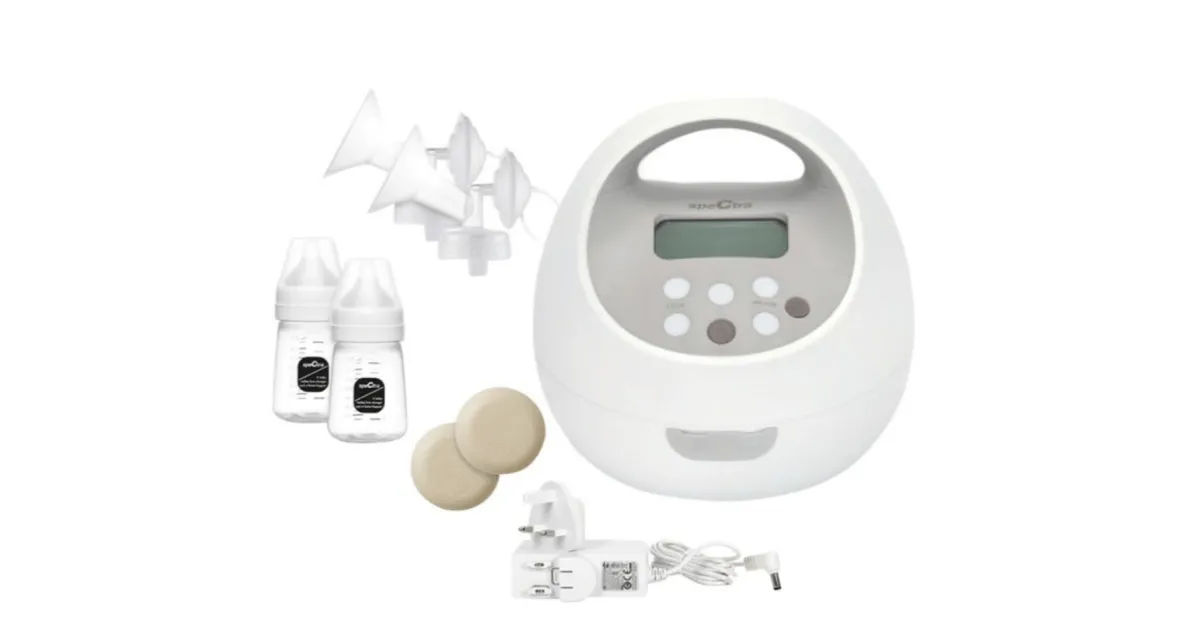
The good news is that you do not need to use complicated settings to get Spectra S1 Pro Breast Pump. Once you understand how the pump's massage and expression modes work, you can adjust the cycle speed and vacuum level based on how your body responds. The goal is not to choose the strongest setting possible. The goal is to find the highest comfortable vacuum that helps you remove milk effectively.
This guide explains how to use the Spectra S1 Pro Breast Pump settings, when to switch modes, how to adjust suction, and how to create a pumping routine that works for your individual needs.
How the Spectra S1 Pro Breast Pump Works
The Spectra S1 Pro Breast Pump uses two primary pumping modes: massage mode and expression mode. These modes are designed to support different stages of the pumping process.
Massage mode is generally used at the beginning of a pumping session. Its faster cycle and gentler suction are intended to encourage the milk ejection reflex, often called the let-down reflex. Once milk begins flowing steadily, many pumping parents switch to expression mode.
Expression mode is designed for milk removal. It uses slower cycles and allows you to adjust both the cycle speed and vacuum level. These adjustments give you more control over the way the pump feels and how effectively it removes milk.
The pump also allows you to control each breast independently when using a single pumping setup or use both sides simultaneously with a double pumping setup.
The important point is that there is no single setting that is automatically best for everyone. A setting that works well for one person may feel too strong or too weak for another.
What Are the Best Starting Settings?
For many new users, a simple starting routine is the easiest approach.
Begin in massage mode at a comfortable vacuum level. Many parents start with a low vacuum, such as level 1 or 2, and gradually increase it if comfortable. You can stay in massage mode for a few minutes or until you notice milk beginning to flow.
Once milk is flowing, switch to expression mode. A moderate cycle speed and a comfortable vacuum level are often a good starting point.
For example, you might begin expression mode around cycle 54 with vacuum level 3 or 4. If that feels comfortable and milk is flowing well, you can gradually experiment with a higher vacuum.
These numbers should be treated as starting points rather than strict instructions. Your body may respond better to a different combination.
The best setting is usually the one that provides strong, comfortable stimulation without causing pain or damaging the nipple or breast tissue.
How Massage Mode Can Help With Let-Down
Massage mode is often the first setting to try at the beginning of a pumping session.
The faster stimulation is intended to imitate the type of sucking pattern that a baby may use when first latching. This can help stimulate the milk ejection reflex for some people.
Start with a low vacuum and gradually increase it as long as the sensation remains comfortable.
You do not need to use the strongest suction during massage mode. The purpose is stimulation rather than maximum milk removal.
For many people, two to five minutes in massage mode may be enough to trigger a let-down. Others may need more time, especially if they are stressed, tired, or pumping at a time when milk flow is naturally slower.
Watch the milk rather than relying only on the clock.
If you see milk beginning to spray or flow more consistently, that can be a good time to switch to expression mode.
How to Choose the Right Expression Mode Cycle
Once you switch to expression mode, the cycle setting becomes more important.
The cycle refers to the number of suction cycles the pump performs per minute. On the Spectra S1 Pro Breast Pump, different cycle speeds can be useful at different stages of a pumping session.
A faster cycle may help some people maintain milk flow, while a slower cycle with stronger suction may help others remove milk more effectively.
Many parents find that starting with a faster cycle works well during the early part of expression mode. You can then experiment with slower cycles as milk flow changes.
For example, you might begin at cycle 54 and gradually test cycle 50 or 46. If milk flow increases at a particular cycle, you may want to stay there.
The key is to pay attention to your body's response.
If milk is flowing well, there is no need to change settings simply because you have been pumping for a certain amount of time. On the other hand, if milk flow slows significantly, changing the cycle may help stimulate another let-down.
How to Adjust Vacuum Level
Vacuum is the strength of the pump's suction.
One of the most common mistakes new pumping parents make is assuming that higher suction automatically means more milk. That is not always true.
A very high vacuum can cause pain, swelling, nipple damage, or discomfort. In some cases, excessive suction may actually make milk removal less efficient.
Instead of immediately increasing the vacuum to the highest comfortable level, start low and increase gradually.
Try increasing the vacuum one level at a time.
Stop increasing when the suction becomes uncomfortable. You should feel a strong pulling sensation, but you should not experience sharp pain, pinching, burning, or significant discomfort.
If you feel pain, reduce the vacuum.
The best vacuum level is often the highest level you can comfortably maintain while keeping the milk flowing.
Why Comfort Matters More Than Maximum Suction
Comfort is an important part of effective pumping.
When pumping causes pain, your body may respond with tension and stress. This can make it harder for some people to achieve an effective let-down.
A comfortable pumping session can be more productive than a painful session using maximum suction.
Your nipples should not become severely swollen or injured after pumping. Some temporary changes in nipple appearance can occur, but significant pain or tissue damage is a sign that something needs to be adjusted.
If pumping hurts, check your flange size, reduce the vacuum, and make sure your nipple is centered correctly.
Do not assume that pain is something you simply have to tolerate.
Finding the Best Settings for Maximum Milk Output
If your primary goal is to maximize milk removal, the best approach is to experiment systematically.
Start with your normal pumping routine.
Begin with massage mode and a comfortable vacuum. Once you experience let-down, switch to expression mode.
Choose a moderate cycle and vacuum.
Observe your milk flow.
If milk is flowing steadily, continue. When the flow slows down, try changing the cycle speed. You can also try increasing or decreasing the vacuum slightly.
Give each adjustment enough time to see how your body responds.
Do not change several settings at the same time. If you change the cycle and vacuum simultaneously, it becomes harder to know which adjustment made a difference.
Keep track of settings that consistently produce good results.
Over time, you may discover that one combination works particularly well for you.
What Settings Work Best for a First-Time User?
If you are completely new to pumping, simplicity is usually best.
Start in massage mode with low suction.
Increase the vacuum slowly until you feel comfortable stimulation.
After your milk begins flowing, move into expression mode.
Start with a moderate cycle speed and low-to-moderate vacuum.
From there, adjust one setting at a time.
You may discover that your preferred settings change during the same pumping session. That is normal.
Your body does not necessarily respond to the pump in exactly the same way from beginning to end.
The most useful skill is learning to recognize changes in milk flow and responding to them.
How to Use Settings During a Longer Pumping Session
During a longer pumping session, you may need to change settings more than once.
A common routine is to begin with massage mode to encourage let-down.
Once milk begins flowing, switch to expression mode.
Continue pumping until the initial strong flow begins to slow.
At this point, you can experiment with a different cycle or vacuum setting.
Some parents find that switching back to massage mode briefly can encourage another let-down. Once milk begins flowing again, they return to expression mode.
This process can be repeated if it remains comfortable and productive.
However, you do not need to constantly adjust the pump.
If you are comfortable and milk is flowing well, leaving the settings alone may be perfectly fine.
How to Use the Pump When Milk Flow Slows
Milk flow naturally changes during a pumping session.
It is common to experience a strong initial flow followed by a slower period.
When this happens, you can try several approaches.
First, check whether you need another let-down.
Switching briefly back to massage mode may help.
If milk begins flowing again, return to expression mode.
You can also experiment with the cycle speed.
Try moving from a faster cycle to a slower one or vice versa.
Another option is to adjust the vacuum slightly.
Remember that stronger suction is not always better.
If increasing the vacuum causes discomfort without improving milk flow, reduce it again.
Can You Use the Same Settings Every Session?
You can, but you do not have to.
Many pumping parents develop a favorite set of settings that works consistently.
However, milk production can change throughout the day.
Your breasts may feel different in the morning compared with the evening. Your milk supply can also be affected by hydration, stress, sleep, feeding frequency, and hormonal changes.
Because of this, the settings that work best in one session may not produce exactly the same results in another.
It is helpful to have a general routine but remain flexible.
Think of your usual settings as a starting point rather than a permanent rule.
Morning Pumping Settings
Some parents notice that they produce more milk during morning pumping sessions.
If your breasts feel fuller in the morning, you may find that your usual settings work very well without much adjustment.
Start with massage mode.
Once you achieve let-down, move into expression mode.
If milk is flowing strongly, continue at a comfortable setting.
There is no need to increase suction simply because your breasts feel fuller.
If your breasts are particularly sensitive after a long period without milk removal, a gentler vacuum may initially feel better
Conclusion
Finding the best settings for the Spectra S1 Pro Breast Pump is ultimately about learning how your own body responds to different combinations of cycle speed, vacuum strength, and pumping modes. There is no single setting that works perfectly for every breastfeeding or pumping parent. What works well for one person may feel uncomfortable or produce different results for someone else.
A good approach is to begin with gentle stimulation in massage mode. Start with a comfortable vacuum and allow your body time to respond. Once milk begins flowing, switch to expression mode and adjust the cycle speed and vacuum according to your milk flow and comfort level. Increase suction gradually rather than immediately choosing the highest setting.
Remember that stronger suction does not automatically mean more milk. The most effective setting is generally the highest comfortable vacuum that allows you to maintain good milk flow without causing pain, nipple swelling, or tissue irritation. Comfort should always be treated as an important part of an effective pumping routine.
It is also normal for your preferred settings to change during a pumping session. You may begin with a faster cycle to encourage milk flow, then switch to a different cycle as your milk starts to slow. Some people benefit from briefly returning to massage mode when they want to encourage another let-down. Experimenting with these adjustments can help you understand what works best for your body.
Flange fit is another factor that should not be overlooked. Even the ideal pump settings may not work well if the flange is the wrong size or your nipple is not positioned correctly. Persistent pain, significant swelling, bleeding, or nipple injury should not be considered normal. If you experience these problems, reduce the suction and consider checking your flange fit or speaking with a lactation professional or healthcare provider.
The most useful way to find your ideal settings is to experiment gradually and pay attention to the results. Change one setting at a time and observe whether milk flow, comfort, and overall output improve. With regular use, you will likely develop a personalized routine that you can adjust depending on the time of day, your milk supply, and how your body feels.
Ultimately, the best Spectra S1 Pro Breast Pump settings are the ones that balance effective milk removal with comfort. Instead of focusing on maximum suction or copying another person's exact settings, use the pump as a flexible tool and learn what your body responds to best. With patience, observation, and small adjustments, you can create a pumping routine that is comfortable, efficient, and sustainable for your individual breastfeeding journey.